Open any dance shoe listing today and there's a good chance you'll see the words "podiatrist-designed" somewhere in the description. It's become one of the most common claims in dance footwear — which is exactly the problem. When every brand says it, the phrase stops meaning much unless you know what to actually look for underneath it.
At Bailaz, it's not a marketing line we added after the fact — it's the starting point of how every shoe gets built. Here's what that actually involves, and a few honest questions to help you tell a real claim from a borrowed one.

What "Podiatrist-Designed" Actually Changes
Genuinely podiatrist-informed footwear isn't about a consultant glancing at a finished sample and offering feedback. It changes decisions that happen well before a shoe is finalised:
- Last shape and width — the mould a shoe is built around, adjusted for how a dancer's foot actually spreads and loads under movement, not a generic shape borrowed from everyday sneakers.
- Arch and heel support — placed based on pressure data from real feet, rather than guessed at.
- Flex points — where the sole is engineered to bend, matched to how a foot rolls through turns, pivots and weight transfers specific to dance rather than walking or running.
None of this is visible in a product photo. It only shows up in how a shoe actually feels an hour into a class, not in the first thirty seconds of trying it on.
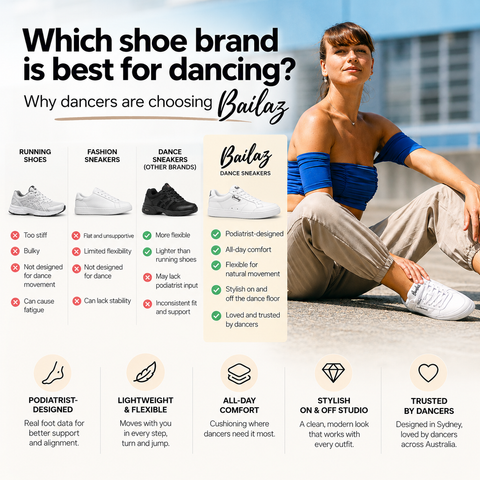
Three Things a Generic "Dance Sneaker" Gets Wrong
Most sneakers marketed for dance are repurposed lifestyle or athletic shoes with a few cosmetic tweaks. Common gaps:
- Too rigid through the forefoot — built for forward motion like walking or running, not the lateral pivots and turns dance demands.
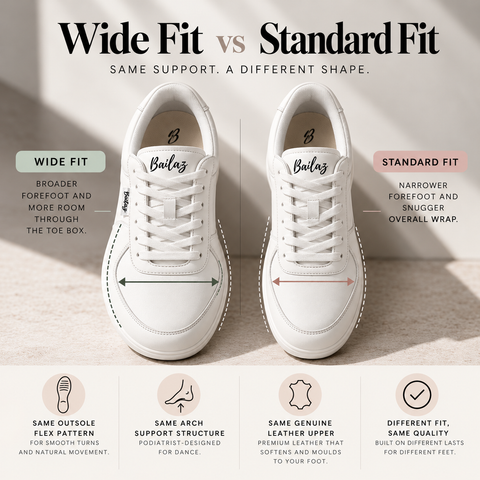
- One-width-fits-all lasts — a shoe that's comfortable for a narrow foot can be genuinely painful, not just snug, on a wider one.
- Arch support as an afterthought — a flat, unsupportive footbed is fine for short wear, but breaks down over a two-hour class or social.
None of these are dealbreakers for casual wear. For dancers training multiple times a week, they add up — often showing up as foot fatigue, blisters or discomfort that gets blamed on "just needing to break the shoes in."
How to Tell If a "Podiatrist-Designed" Claim Is Real
A few honest questions worth asking before you trust the label:
- Is the involvement named, or vague? "Designed with podiatrist input" from a specific, named clinic or professional is a different claim to an unattributed "podiatrist-approved."
- Does the brand explain what actually changed? Real involvement usually shows up as specifics — arch height, width options, sole flexibility — not just a badge on the listing.
- Is there a wide-fit option at all? Podiatric input tends to produce width options, because foot shape genuinely varies. A single standard width across the whole range is a signal the claim may be more marketing than process.
What This Looks Like in a Bailaz
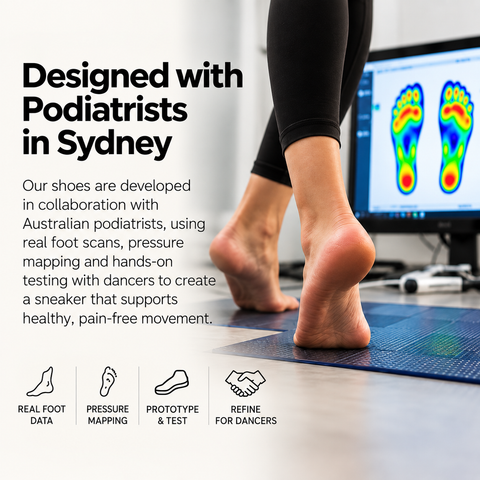
Every Bailaz style goes through the same process before it reaches a dance floor: real foot scans and pressure mapping with Australian podiatrists, design and prototyping based on that data, and testing with actual dancers in real classes across different surfaces and styles — not just a single fit check.

It's also why Bailaz comes in standard and wide fit where it matters — because the foot data behind the shoe showed that one width genuinely doesn't serve everyone, and building both properly, not just sizing up a standard last, was part of that podiatrist input from the start. Every pair is made with premium materials, including our proprietary flex-leather in wide-fit styles, for support that's built in rather than added on.
If you've been dancing in shoes that feel fine standing still but wear you down by the second hour of class, it might not be a fit issue you need to push through — it might be that the shoe wasn't built around a dancer's foot in the first place. Browse the range and see what podiatrist-designed actually feels like.