Why Dancers Get Hurt in Ways Other Athletes Don't
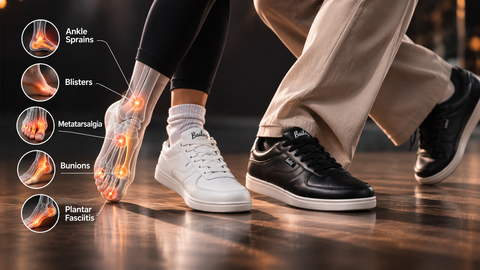
Dance puts a strange mix of demands on your feet — repeated impact like running, but combined with pivots, sudden direction changes and hours of continuous wear that most sports don't ask for. Most dance foot injuries aren't freak accidents. They're the slow result of a shoe that wasn't built for what your foot is actually doing. Here are five of the most common ones we see, and what actually helps prevent each.
1. Plantar Fasciitis
That sharp heel-and-arch pain, worst with your first steps in the morning, is usually plantar fasciitis — inflammation of the band of tissue running along the bottom of your foot. Repeated impact without real arch support is one of the biggest contributors. Bailaz sneakers are built with podiatrist-designed arch support engineered specifically around real foot-scan data, not a generic insole dropped into a standard last, which is what most dance shoes are working with.
2. Bunions
A bunion is a bony bump at the base of the big toe, and narrow, rigid shoes make the underlying misalignment worse over time by crowding the toe joint with every step. This is exactly what Wide Fit exists to solve — a broader forefoot last gives your toes room to sit naturally instead of being forced into a narrow point night after night.
3. Blisters
Blisters come from friction, and friction comes from a shoe that doesn't move with your foot. Rigid leather that hasn't broken in, or synthetic uppers that don't flex, rub against the same pressure points for hours. Our flex-leather upper is specifically developed to soften and mould to your foot from early wears, rather than staying stiff and creating the friction points that cause blisters in the first place.
4. Ankle Rolls and Sprains
Sudden direction changes on an unstable base are how ankles get rolled — and it happens more in shoes with poor lateral support or an outsole that doesn't grip predictably. The outsole flex pattern in every Bailaz shoe is built around real dance movement, giving you a stable, predictable base for pivots and turns instead of a sole that was really designed for walking in a straight line.
5. Metatarsalgia
This is pain and inflammation across the ball of the foot, usually from repeated pressure concentrated in too small an area — common in shoes with thin, unsupportive soles or a forefoot that's too narrow for how your foot actually loads weight. Proper arch support changes how pressure distributes along your whole foot, taking load off the ball of the foot rather than dumping it all in one spot, which is a big part of why podiatrist-designed construction matters more than marketing language.
The Common Thread
Every one of these injuries gets worse — or starts in the first place — when a shoe is built around a generic last rather than real foot data. That's the entire premise behind how Bailaz shoes are developed: designed in collaboration with Australian podiatrists, using real foot scans and pressure mapping, then tested with actual dancers rather than assumed from a spec sheet.
If you're already managing pain from one of these, it's worth reading about how we approach podiatry and orthotics for dancers, or browsing our Wide Fit range if bunions or forefoot crowding are part of what you're dealing with. Prevention is always easier than recovery — and the right shoe is one of the few variables in dance that's actually within your control.